
Hidden Costs of Disconnected Aviation Accounting Systems

TAT reporting helps aviation businesses see more than the final completion date. It shows where work slowed down, what caused the delay, and which part of the process needs attention. With better reporting, teams can plan more accurately, update customers sooner, manage vendors better, and reduce delays across work orders.
How TAT Reporting Improves Aviation Performance

TAT reporting helps aviation businesses see more than the final completion date. It shows where work slowed down, what caused the delay, and which part of the process needs attention. With better reporting, teams can plan more accurately, update customers sooner, manage vendors better, and reduce delays across work orders.
How SaaS ERP Simplifies Accounting in Aviation
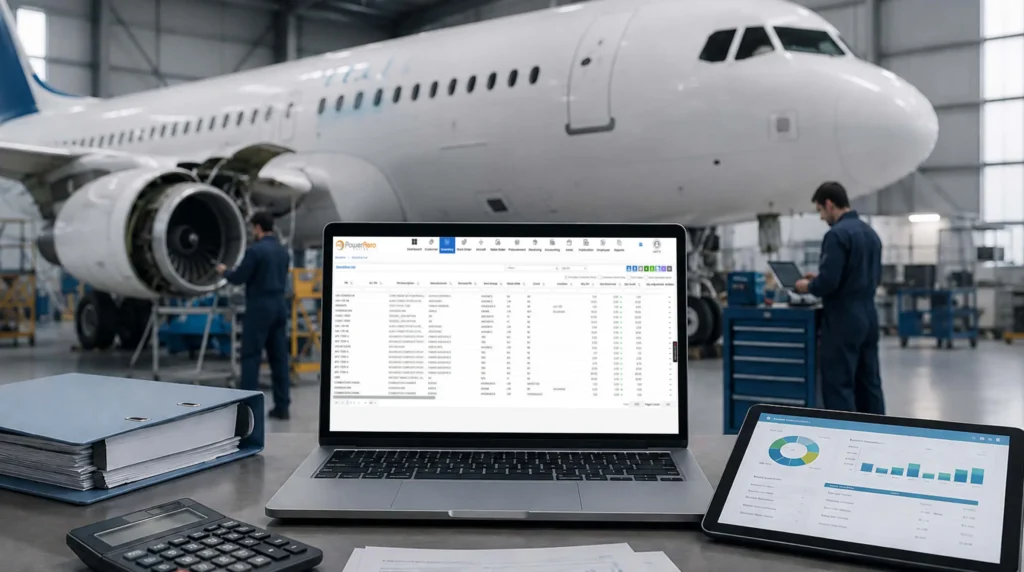
Aviation receiving delays can make a part look available when it is not ready to use. Paperwork, inspection, serial numbers, location, and cost updates all matter before the part moves. When receiving slows down, inventory, work orders, customer shipments, billing, and revenue can all be affected.
How Aviation Receiving Delays Hurt Inventory & Revenue

Aviation receiving delays can make a part look available when it is not ready to use. Paperwork, inspection, serial numbers, location, and cost updates all matter before the part moves. When receiving slows down, inventory, work orders, customer shipments, billing, and revenue can all be affected.
Vendor Utilization Reports for Aviation Procurement
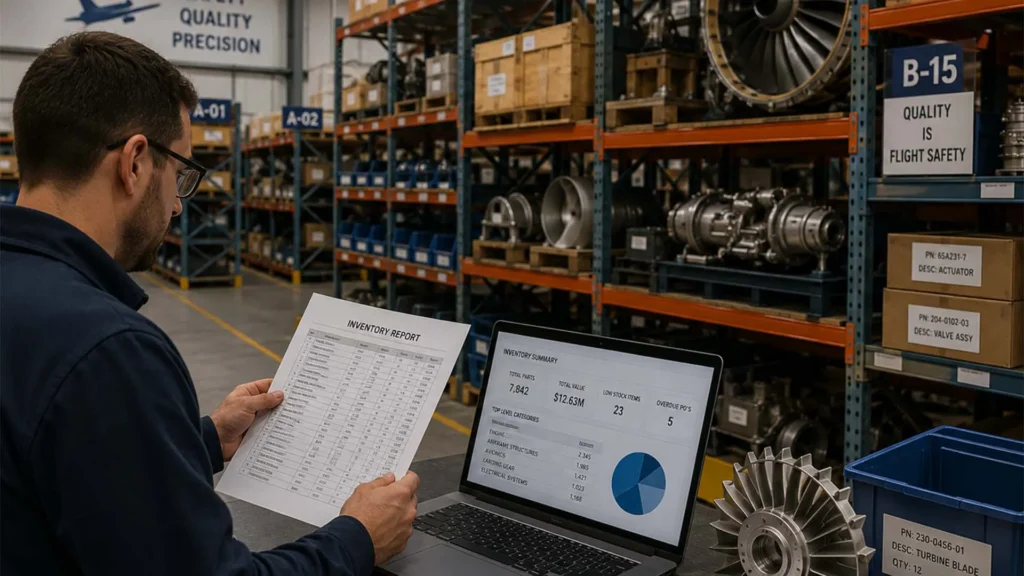
Vendor utilization reports help aviation procurement teams see which suppliers are used most, how they perform, and where vendor choices affect cost, lead time, receiving, and documentation. With clearer supplier history, teams can make better purchasing decisions, reduce guesswork, and manage vendor dependency with more control.
Why Aviation Needs WIP Accounting for Maintenance Operations

A maintenance work order may stay open longer than expected, but the cost can start much earlier. A technician may have entered the time. A part may have been issued from stock. A vendor repair may be underway. Freight or outside service cost may come in later. The work is still open, but money has […]
Aircraft Asset Management: Tracking Engines and Serialized Parts Across Their Full Lifecycle

Aircraft engines and serialized parts need more than location tracking. This blog explains how asset records connect maintenance, inventory, finance, documents, and compliance across the full lifecycle, so aviation teams can see what is available, what is usable, and what still needs attention before an asset moves forward.
Exchange Management in Aviation: Tracking Cores
A part exchange can look finished too early. The serviceable unit arrives, maintenance installs it, and the aircraft work moves ahead. Everyone can feel like the issue is handled. But the removed core still has work attached to it. It has to be identified, checked, documented, shipped back, accepted by the supplier, and cleared by […]
Why Aviation Teams Need a Unified Management Platform

A maintenance job can start with one simple request. Then the work spreads out. Someone checks the part. Inventory looks at stock. Procurement may need a vendor update. Receiving waits for the part to land. Finance needs the cost before the job can close. This is where disconnected tools slow the team down. The job […]
What Aviation Digital Transformation Actually Looks Like in Day-to-Day Operations

Aviation digital change is not just about new software. It is about helping parts, work orders, procurement, finance, and compliance move through one connected record. This blog explains how aviation teams can reduce manual checks, avoid lost updates, and keep daily work easier to track from request to final record.