
Why It’s Important to Plan Tech Transitions Before Year-End (and How Power Aero Suites Saves Time & Money)
Every aviation business hits that year-end rush. Closing books, managing audits, reviewing contracts, and juggling last-minute service requests. It’s also when leaders realize the gaps in their systems, such as outdated aviation ERP software, scattered data, manual accounting, and poor visibility, that make everything slower than it should be.
And here’s the truth: if you wait until the new year to fix it, you’re already behind to understand why planning your tech transitions before year-end can save you time, money, and countless headaches down the road.
This article talks about:
- Why Planning Tech Transitions Early Matters
- Signs Your Current System is Holding You Back
- The Cost of Delaying ERP Implementation
- Why Year-End Is the Smartest Window
- The Human Side of a Smooth Transition
- Building a Transition Plan That Actually Works
- How Power Aero Suites Makes It Easier
- The Bigger Picture
Why Planning Tech Transitions Early Matters
Tech transitions are not like buying new hardware or hiring another accountant. They change how your entire operation runs, from how invoices are created to how technicians log time or how compliance data flows into financial reports. That’s why smart teams begin their ERP implementation planning early, aligning processes before fiscal deadlines create extra pressure.
When you plan transitions before year-end:
- You enter the next fiscal cycle clean — no half-migrated data or “we’ll fix it later” patches.
- Teams have time to adapt before the busy season kicks in.
- Financial alignment becomes simpler because old systems and new ones sync while both are active.
- You catch inefficiencies you’ve been ignoring — like duplicate workflows or hidden costs buried in old software.
By handling it early, you make the transition part of your growth strategy, not your crisis management plan.
Signs Your Current System Is Holding You Back
You don’t always realize when your technology has quietly become the problem. But the warning signs are everywhere in aviation businesses — subtle at first, until they start costing real time and money.
Here’s how to spot them:
- Too many manual fixes: Every time your team exports data to Excel or creates a “temporary workaround,” you’re losing efficiency.
- Slow decisions: Reports take hours to compile, approvals take days, and no one knows which version of data is correct.
- Compliance panic: Audit season always feels like a fire drill because documentation isn’t linked or traceable.
- Disconnected tools: Finance, inventory, and maintenance each use different systems that never align.
- No visibility: You can’t see where bottlenecks form or how much a delay actually costs you.
If these sound familiar, your system isn’t helping you run smoother — it’s silently slowing you down. And the longer you wait, the more those inefficiencies stack up.
The Cost of Delaying ERP Implementation
Many aviation MROs, brokers, and finance teams keep pushing ERP upgrades or migrations to “next quarter.” But those delays quietly cost more than you think.
- You spend hours reconciling mismatched data between old accounting tools and spreadsheets. This is where modern aviation ERP solutions streamline payables, invoices, and reporting through built-in automation and visibility.
- Compliance documents sit in disconnected drives, risking audit issues.
- Vendors and clients lose patience because quotes, invoices, or reports take too long.
- Manual work piles up while competitors move faster with automated systems.
By the time the new year starts, your backlog is already your bottleneck.
Why Year-End Is the Smartest Window
Think of year-end as a soft reset. Data is being reviewed. Books are being closed. Budgets are being prepared. It’s the one time you naturally have a full operational snapshot — the perfect moment to map what’s working and what’s not.
A smart transition doesn’t just swap software. It refines how you work. It’s when you streamline redundant processes, clean your data, and re-align systems with actual business needs.
And in aviation, where margins depend on precision, that alignment makes all the difference.
The Human Side of a Smooth Transition
Tech transitions often fail not because of the software, but because teams aren’t ready. When you plan early, you give people time to adapt. That’s what separates smooth rollouts from messy overhauls.
Early planning allows you to:
- Train users gradually, instead of rushing everyone at the last moment.
- Pilot-test modules with smaller teams and fix issues before full implementation of the aviation ERP software.
- Avoid downtime when audits, renewals, and reporting are at their peak.
When the entire team walks into the new fiscal year using a system they already know, productivity doesn’t just improve — it compounds.
Building a Transition Plan That Actually Works
Planning a tech transition is about breaking down the process into stages that minimize disruption and build confidence across teams.
A solid transition plan usually includes:
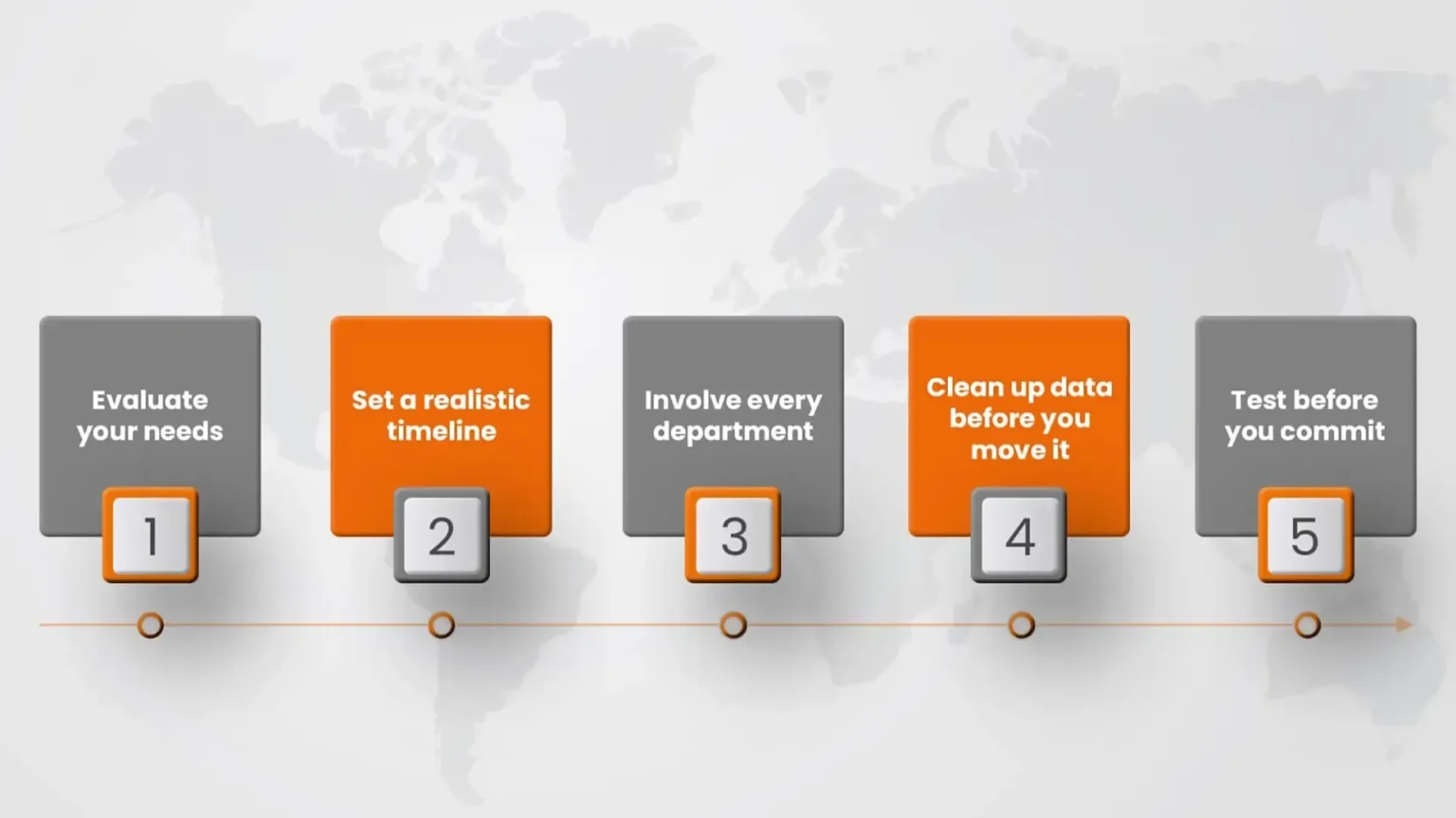
The goal isn’t to change everything overnight — it’s to make every change count. A planned, step-by-step approach turns transitions from risky into routine.
How Power Aero Suites Makes It Easier
Power Aero Suites was built exactly for moments like this. A cloud-native ERP software designed specifically for aviation, it helps you shift from outdated, disconnected systems into one clean, unified platform — without disrupting daily work.
Here’s how it saves both time and money during year-end transitions:
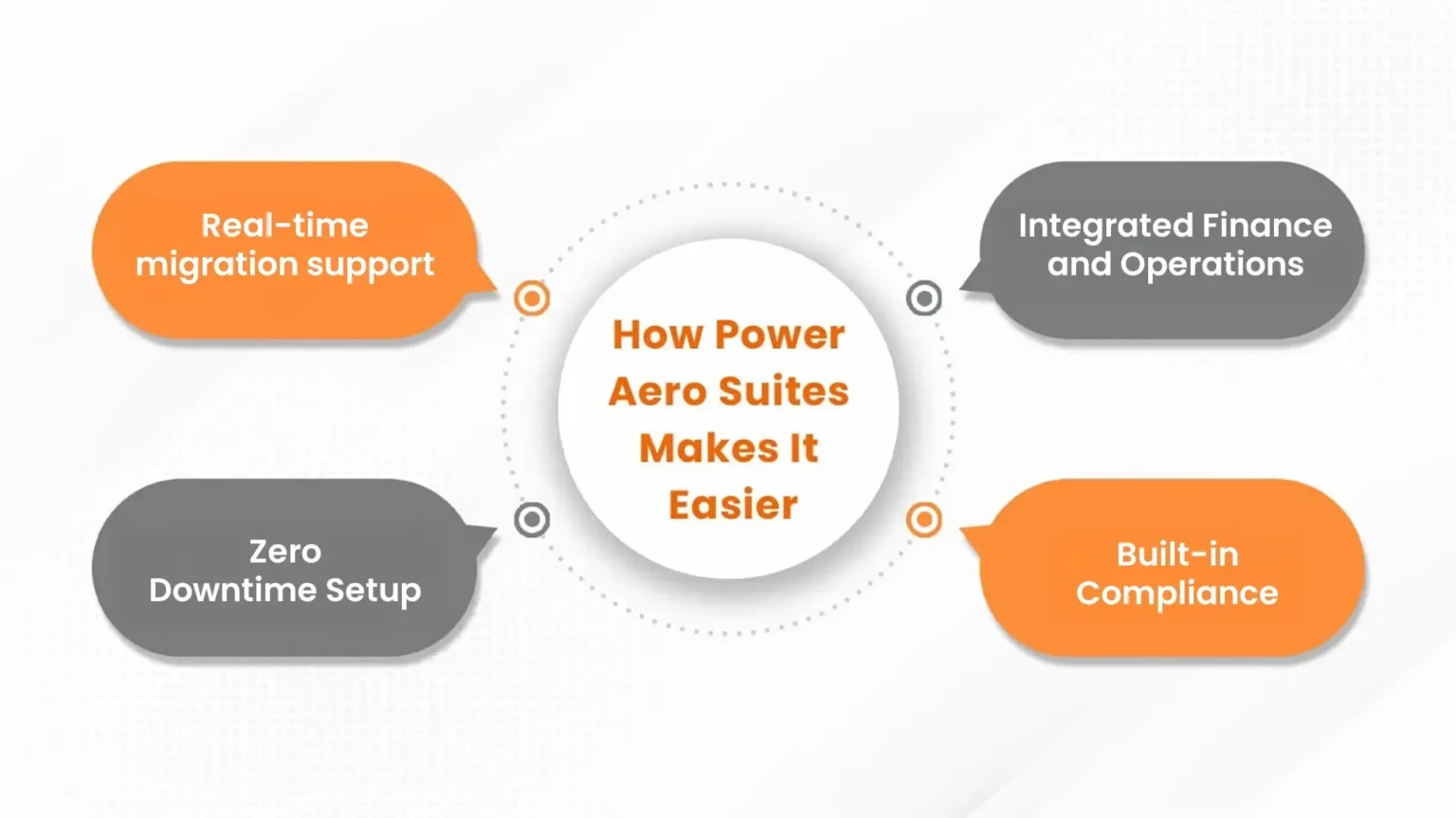
It’s not just an ERP switch. It’s operational clarity that sets you up for the next year’s goals instead of cleaning up the last year’s mess.
The Bigger Picture
A well-timed tech transition isn’t an expense. It’s an investment in time, accuracy, and peace of mind. You’re not just upgrading software; you’re upgrading how your business functions every single day.
When systems talk to each other, when financial data updates automatically, and when technicians can log hours from anywhere, your people stop firefighting and start improving.
That’s what Power Aero Suites brings to aviation teams: less friction, more focus. Year-end doesn’t have to be stressful. Use it as a launchpad for better systems, faster reporting, and cleaner operations.
Power Aero Suites helps you modernize without chaos, giving you a head start before everyone else even begins planning.
Ready for a Smoother New Year? Contact Us to get started today.
FAQs
What is aviation broker ERP software?
It’s a specialized ERP system tailored for aviation parts brokers, integrating sales, inventory, repair, compliance, and finance modules.
Why can't general ERP systems suffice?
They lack aviation-specific features like part traceability, repair workflows, certificate management, and consignment tracking.
What is aircraft parts management ERP?
It refers to ERP systems focused on managing parts life cycles—from procurement to delivery—including repairs and returns.
Do MRO parts broker software modules differ?
Yes — they include repair routing, shop control, turnaround tracking, and quality inspection, beyond standard brokerage.
How does aviation inventory management ERP help?
It gives real-time visibility and accuracy to inventory levels, preventing stockouts, overstocking, or quoting issues.
What ROI can brokers expect from ERP adoption?
Many see payback within 12–24 months via reduced working capital, fewer errors, faster sales cycles, and higher fill rates.
Can ERP integrate with external marketplaces?
Yes — modern systems support APIs and EDI to sync inventory & quotes with external aviation marketplaces.
